Rolled Oats Rolled into an Easy Dessert
I’m not going to lie. I chose to make this particular cake this week because it had “Lazy” in the title. I was coming off a week and a half of work travel, with one catch-up day, and then leaving for Florida with my husband’s high school band (on a bus for twenty-four hours with teenagers, I’ll note). I needed something easy.
This recipe delivered. The ingredients were simple, and the tools were minimal. It was exactly what I needed to get in and out of the bakery swiftly on a busy day.
The history of oat cakes dates back to ancient times; however, it didn't become an American dessert until the 1920s, when a shortening company popularized it as a “Lazy Daisy” style cake. In the 1950s, Quaker Oats picked it up with their own version. The cake’s lasting popularity stemmed, in part, from its clever use of simple pantry staples. Useful and delicious—I’d call that a win.
In the description for this recipe in Vintage Cakes, the author, Julie Richardson, notes that the recipe was bestowed by her mother-in-law. Family recipes, lovingly passed down through the years, are a beautiful way to connect over delicious food while creating memories.
Broiled and Bewitched
The making of this confection began with soaking old-fashioned oats in boiling water, butter, and milk to soften them up and hold moisture—you see where this is going?
The rest of the recipe included the usual suspects—eggs, sugar, vanilla, flour, and spices. The mere fact that the recipe instructed me to “dump” the flour is a testament to the casual, easy process.
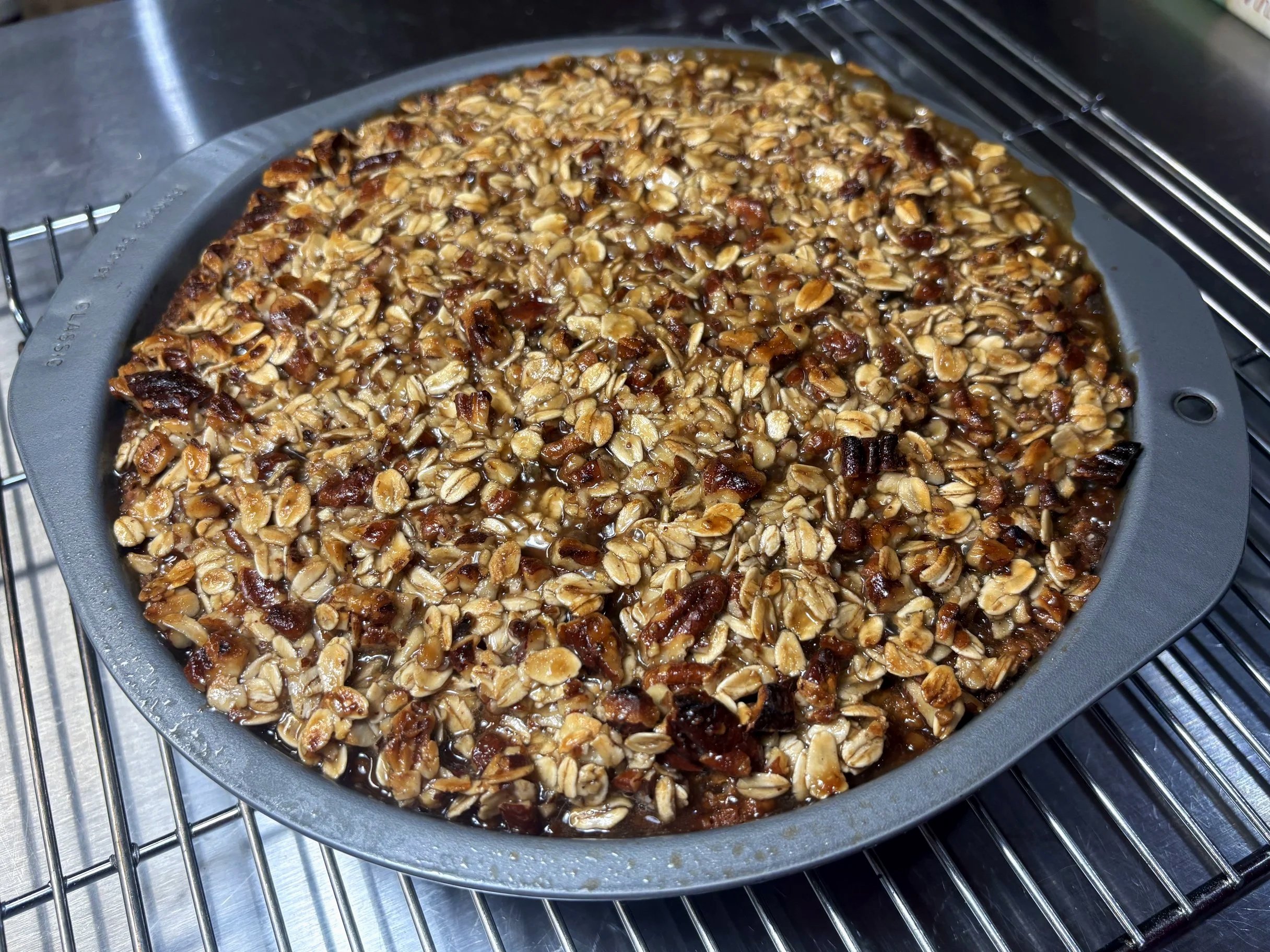
What made this cake magical? A caramelized topping of sugar, toasted pecans, coconut, butter, and oats. The ingredients, combined and slathered across the top of the cake, became a bubbly and golden veneer after meeting the broiler.
Coconut Milk—an Essential Staple
In my opinion, the star element in this creation was the substitution of coconut milk for the liquid. This was a brilliant choice by the author. The coconut milk added richness and a slight elevation of the flavor profile—perfect!
Perhaps in the 1950s, coconut milk wasn’t a pantry staple for most, but it is in mine. Coconut milk adds balance and body to savory dishes (curries and soups—yum!) and velvety, sweet nuttiness to desserts. Versatility wins a seat in my kitchen.
Versatility Wins
In the end, this cake may have been the moistest cake I’ve ever made, thanks to the oats and coconut milk. It was so dense and luxurious, with a sweet, nutty crunch on top. It’s definitely a keeper.
Fun fact: I actually forgot to add the shredded coconut to the topping—did I mention I was doing five other things while I was working on this? It was still incredible. I’ll take that as a subtle sign that I need to make this again.
This recipe is one to keep at the front of a recipe box for its versatility. Served warm with ice cream—what a dream! Served for brunch with coffee—your guests will surely return. I tried it warm, of course. The leftovers accompanied us on our bus trip for breakfast (with coffee), and I left some for my son (with a pot of coffee) to enjoy while dog-sitting.
Reminiscent of a Familiar Favorite
Tasting the cake immediately reminded my husband of my signature oatmeal pie that everyone requests. There is a long story behind the creation of that recipe, but in short, years ago, I modified an online recipe to model a pie from a favorite restaurant. Now, for every winter holiday, my family screams for oatmeal pie.
I didn’t recognize it before, but almost all of the ingredients in this oatmeal cake also fill my pie (aside from the flour). No wonder I fell in love with the Lazy Daisy! She elicited the feeling of being with my family.
A Taste of the Past: The Transcend Moment
When food traditions weave into memories, you can actually taste the past. As a beloved recipe is passed down through generations, it carries pieces of our story. The past shows up in the present and wraps unconditional love around those who share it. Unconditional, because recipes don’t judge. The love enters all who partake.
In old family recipes, time is baked into a gift and shared in the present. How apt that many favorite family recipes are offered at holidays. The gathering of family beckons fond reflection and invites legacy.
Some of the best memories tie to food—stories, belonging, connection around the table. Just the aroma and the first familiar bite envelop us in that warm, fuzzy feeling—the indescribable sense of tenderness—a feeling of love and security in the moment.
That’s what beloved family recipes mean to me—memories, caring, connecting, tradition. A recipe shared is an endless gift.